As the story has been told and remembered, noting that I’m likely to get this wrong, my maternal grandfather was in the Navy immigrated from Panama to Brooklyn. A lottery was won and the winnings were used to bring my grandmother and her three children to the States.
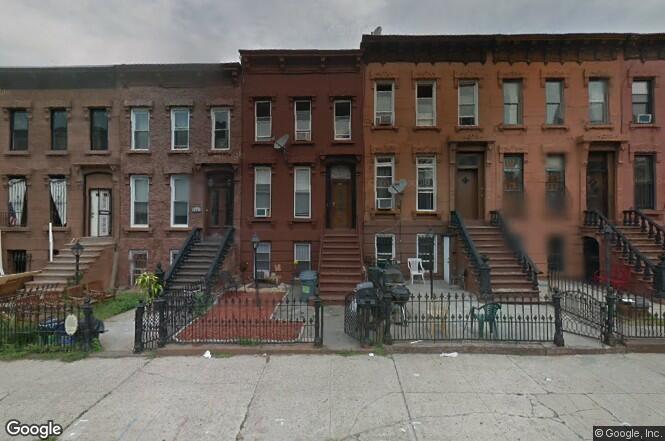
My mother and all her siblings grew up at 457 Van Buren Street, a home that I can remember visiting my grandmother living in. She moved back to her birthplace sometime in the 1980s and the home now lists on Zillow for over a million dollars, despite the fact it looks nothing like how I remember it.
According to my sister, our parents met at Rutgers graduate school and lived together in the Bronx before buying a home across the Hudson River. Originally from Nigeria, he came to the States for college.
Therefore, I am a first-generation American born from immagrants. I didn’t live with my father, so I never learned his native language of Yoruba. My mother speaks a variety of languages, but with the exception of the occasional spurt here and there, she didn’t raise me speaking her native Spanish in the house.
So to the outside observer, I’m just black. Or the politically-correct terminology of African-American. But couldn’t I classify myself as being Hispanic-American? Better question is why can’t I just say I’m American and leave it at that?
I’ve never understood why the connotations of a native country needed to be added to any citizen’s classification. Especially since is the branding of Jewish-American, which leads me to question why there isn’t a Catholic-American or Baptist-American.
I wonder if our neighbors to the North deem it necessary to qualify exactly what country someone’s relatives are from. The ‘how’ of this is important, but I’m sure the ‘why’ has something to do with supporting your own. Unfortunately, that’s something this country has made sure to prevent amongst black people for years.

The battle to separate black people has been going on since the first African sold another African to a foreigner and watched them sail away. Whether it was the skin tone of the slave master’s illegimate offspring or just the fact that not all black people are truly black, complexion is still something dealt with today.
In an article going against Ta-Nehisi Coates, Cornell West writes about the “black elite’s refusal to confront poverty, patriarchy or transphobia.” I read that as fancy talk for saying those that made it out refused to look back at those that needed assistance within the community.
Assisting the community was something the Black Panther Party did, providing free breakfast for school children and setting up health clinics. My minor is in ancient history, but I feel both Malcolm X and Dr. Martin Luther King recognizing the power in community unity.
I’m waiting for the Netflix series or film adaptation of the destruction of Black Wall Street in 1921, otherwise known as the Tulsa Race Riot where American’s wealthiest black neighborhood was burned down.
Down at the bottom of the list of things black people need to worry about is our denomination in the eyes of anyone, especially when we barely like each other as a people and that’s the truth.
 Martin Kester - My Digital World
[…] after the Wall Street crash and the Great Depression of the late 1920s, but sadly very close to the Tulsa Race Riot. The nation was only a generation removed from a war about the economic disparity created when you […]
LikeLike