
RDAT Tournament – Game 2 – Groups Bracket
No. 4 – Run D.M.C. – Run D.M.C. vs. No. 5 – Beastie Boys – Licensed to Ill
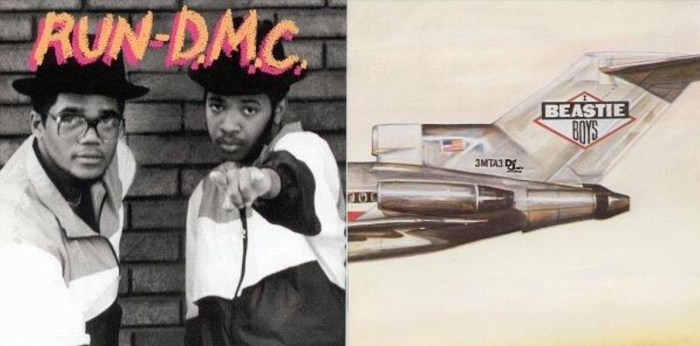
Did you know that Beastie was actually an acronym? It means Boys Entering Anarchic States Towards Internal Excellence. That may be what they were about when the three Jewish boys from various parts of New York City released their debut hardcore punk album entitled Polly Wog Stew.
But by the time they get into the studios of Def Jam and are working with Rick Rubin, it’s clear they’ve changed their ways to what was happening at the time. Rap was still in its infant stages, at least commercially speaking. The trio of Mike D, MCA and Ad-Rock couldn’t have known what would happen when they released Licensed to Ill, but like Nas said – It’s ain’t hard to tell.
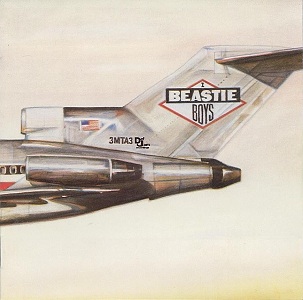
While it might ruffle feathers, the easiest comparison is to Elvis Presley in the 1950s, taking something done primarily by black people and admired from afar and bringing it to the mainstream – aka the white suburbs.
Add in the MTV factor, meaning audiences could see three white boys, rapping in the midst of a crazy party scene full of scantily clad women. But the visual is one thing, the sound that Rubin created for them was perfection. The album’s first track, Rhymin & Stealin, begins with a loop from Led Zeppelin’s “When the Levee Breaks”.
The whole album sounds like a rock record with samples from The Clash, War, Steve Miller Band, AC/DC and a guitar solo by Slayer’s Kerry King on “No Sleep till Brooklyn”. But it’s clearly a rap record, with scratches and cuts and break beats and everything else. That’s why it was accepted on both sides of the proverbial railroad tracks.
“They’re legends in the rap community,” says rapper WC, who along with Ice Cube and Mack 10 is a member of the Westside Connection. “I always listened to the Beastie Boys coming up. They were on one of the heavy-hitting labels [Def Jam] at the time.”
From Meet the Beasties–Again – Los Angeles Times, August 30,1998
That quote speaks to the power and influence the Beastie Boys’ album generated. A record label founded by a small time drug dealer from Queens who managed and produced his younger brother’s group released an album that is one of the few rap/hip-hop records to sell 10 million copies.
The younger brother in question was Joseph Simmons, better known as Run, but better known now as Rev Run. Along with Darryl “D.M.C.” McDaniels, both are credited as writers on “Paul Revere” and “Slow and Low”.
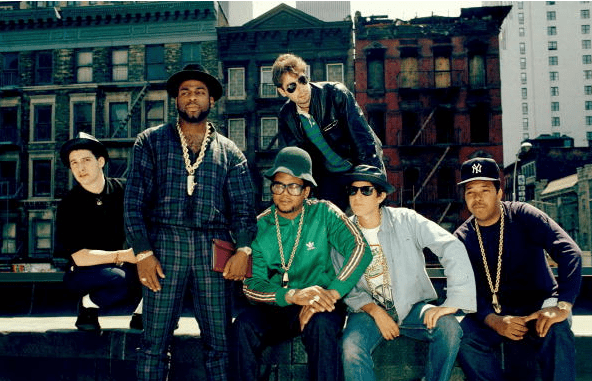
Run D.M.C.’s eponymous debut was released in 1984. It was a slight change from early rap releases like “Rapper’s Delight” and “The Breaks” as both Run and D.M.C. go back and forth over a sound that was simple, yet complex.
Coming from an era that was built around the rappers championing their DJ, Run DMC did that and more. While the Beastie Boys’ subject matter includes girls, shooting guns and drug use (there are a lot of references to ‘dust’), Run DMC managed to mix boosts about Jam Master Jay with going to school and what it would be like if everyone was at peace.
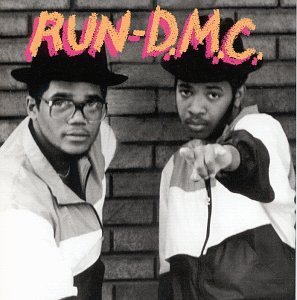
“Wake Up” is a five-minute song about “thoughts that came from a wonderful dream” that included countries joining together to end world hunger, employment for everyone and no prejudice.
On the album, it was placed right after the first released single “It’s Like That”. It’s a track that would never get radio play, but speaks to where the group’s mindset was.
“Jay’s Game” is another track that wouldn’t get radio play back in the 80’s, but an instrumental track featuring scratches and showcasing the skills of Jam Master Jay could be a hit if remixed behind an EDM beat.
The album is only nine tracks long, but five are memorable with “Rock Box” being featured in classic singles like “Runnin'” by The Pharcyde and “Now You’re Mine” by Gang Starr. But it’s the quotable phrases that stand out more.
Two years ago, a friend of mine
Asked me to say some MC rhymes
So I said this rhyme I’m about to say
The rhyme was Def a-then it went this way
The number of artists who have used a parody of those lines is long. There are other lines like that on both albums, but Run DMC seemed the larger influence both for the art form as well as commercially with the release of “Walk This Way” on July 4, 1986.
The cover of the Aerosmith song from 1977 was the real landmark crossover song that brought rap into suburban living rooms and made it acceptable, especially since it came out four months before Licensed To Ill. It made it acceptable for Adidas to sign the group to a million dollar endorsement deal, resurrected Aerosmith’s career and makes it clear why Run D.M.C. move on.

 Martin Kester - My Digital World
[…] that ‘Ice Ice Baby’ became the first hip hop single to top the Billboard Hot 100. (‘Walk This Way’ by Run D.M.C. and Aerosmith only reached the Top 5.) But the ensuing backlash put an everlasting stink on any […]
LikeLike
[…] Game 2 – Groups – Founders vs. Finance […]
LikeLike
[…] wrote about the album Run D.M.C. in Game 2, and I have to believe they were influenced with the Wu-Tang Clan’s original members growing […]
LikeLike
[…] Game 2 – Groups – Founders vs. Finance […]
LikeLike
[…] Game 2 – Groups – Founders vs. Finance […]
LikeLike
[…] continues Groups Play-In from the 5th article in the RDAT series – Founders vs. Finance – We talk about Rick Rubin’s influence at the start of hip hop, then discuss the No. 4 […]
LikeLike